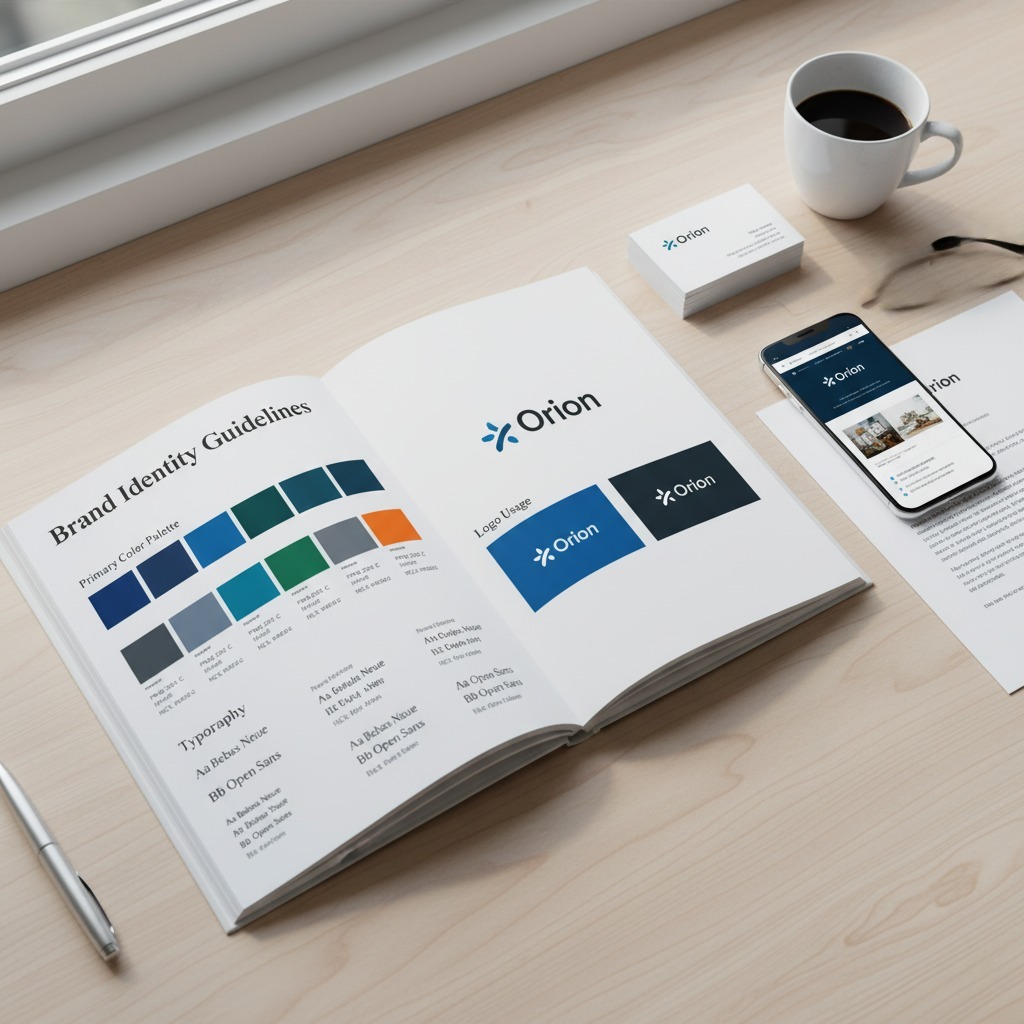
Brand identity is more than just logos and colors; it’s a psychological system that shapes how customers perceive, remember, and emotionally connect with your business. Mastering brand identity psychology empowers you to build trust, loyalty, and premium positioning in a crowded marketplace.
Humans process visual information 60,000 times faster than text, making well-crafted design elements the first point of emotional contact between brands and customers. This subconscious processing drives instant impressions that heavily influence decisions long before conscious consideration.
The Neuroscience Behind Brand Recognition
Recognizable brands activate neural pathways linking visual cues to emotional memory within 150 milliseconds.
Key psychological factors include:
- Shape Psychology: Circles evoke community and trust; triangles suggest innovation and dynamism; squares symbolize stability and reliability.
- Color Psychology: Blues build trust and professionalism; reds stimulate urgency and passion; greens convey growth and sustainability.
- Typography Psychology: Serif fonts foster trust and tradition; sans-serif fonts suggest modernity and clarity; script fonts communicate creativity and personality.
- Pattern Recognition: Consistent use of elements reinforces familiarity and reduces cognitive load.
Visual consistency across all touchpoints strengthens these neural connections, increasing brand recall and customer trust by up to 23%.
Color and Typography: Beyond Aesthetics
Strategic color choices prompt emotional reactions that influence behavior subconsciously.
For example:
Color | Psychological Effect | Common Use Cases |
Blue | Trust, calm, professionalism | Finance, healthcare, tech |
Red | Energy, urgency, excitement | Food, entertainment, sales |
Green | Growth, health, balance | Wellness, eco-friendly brands |
Purple | Luxury, creativity, wisdom | Premium products, creatives |
Typography reinforces brand personality; the right fonts align customer perceptions with brand values. Consistent typography systems ensure readability and accessibility across mediums.
Logo Design and Symbolism
A psychologically effective logo combines shapes, colors, and symbolism that resonate emotionally and cognitively.
Logos function as:
- Recognition anchors that trigger brand associations instantly
- Emotional triggers that convey business values and personality
- Communication tools that summarize what the brand stands for
For example, integrating positive cultural symbols can enhance local connection, while negative space can add memorable visual intrigue.
Building Trust Through Consistency
Trust arises from repeated, coherent brand visual experiences. Cognitive biases equate consistency with professionalism and reliability.
Critical elements include:
- Cohesive color palettes applied uniformly
- Standardized typography hierarchies and usage guidelines
- Consistent photography and imagery styles
- Clear logo usage rules for all channels
Strategic brand consistency has measurable business impact, increasing revenue through enhanced customer retention and premium positioning.
Digital Brand Adaptability
Brands today must adapt professionally across diverse digital platforms without losing psychological impact. Responsive logo versions, scalable typography, and optimized palettes are essential to maintain recognition across mobile, social media, and desktop environments.